Collecting Tips
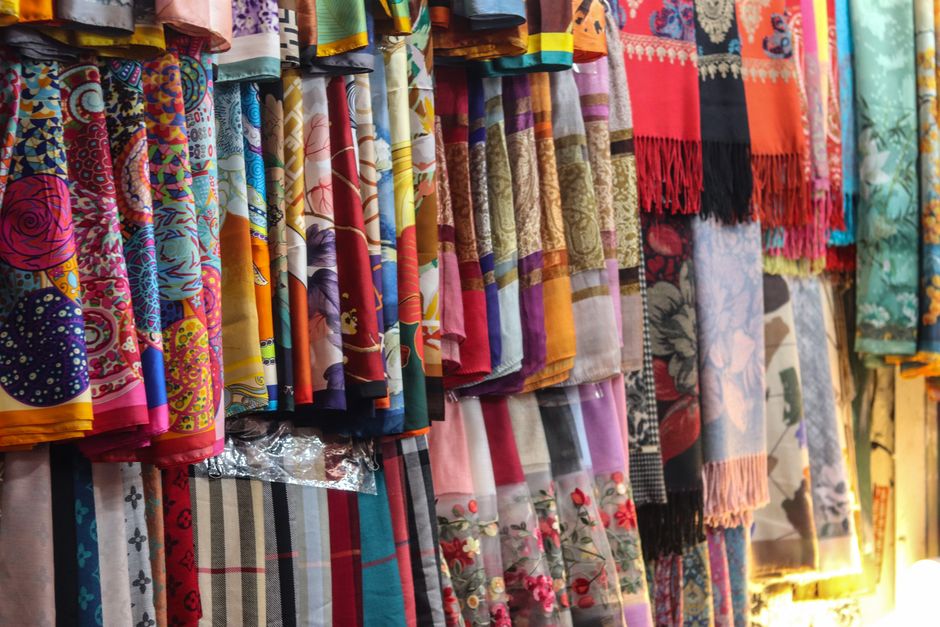
Every bolt of vintage silk carries a quiet autobiography. Long before you check a label or consult an auction record, the fabric itself is already telling you when it was made. Selvage marks, dye behavior, weave density, and finishing techniques all shift with the decades, and learning to read them is one of the most satisfying skills a textile collector can develop. Whether you are browsing a flea market in Lyon or scrolling an online marketplace at midnight, these clues will help you separate a genuine 1920s charmeuse from a clever 1980s revival.
Start with the selvage, the tightly woven edge that runs along both sides of a length of fabric. Mills often printed their name, a color code, or a pattern number directly onto the selvage, and those markings changed as companies merged, rebranded, or adopted new production standards. A selvage with a woven-in name rather than a printed one usually points to an earlier era, while paper labels stitched along the edge tend to appear later. Do not treat any single mark as proof on its own, but stack these observations together and a timeline begins to emerge.
Dye chemistry is another powerful dating tool. Before the widespread adoption of synthetic dyes in the late nineteenth century, silks were colored with natural substances that fade in characteristic ways. Indigo, madder, and cochineal leave subtle signatures, sometimes fading to unexpected undertones or bleeding into adjacent threads. Early synthetic dyes, particularly the aniline family, were famously fugitive and often left a slightly harsh or unusually vivid cast. Later dyes became more stable and more uniform, so a piece with perfectly even color across a large panel is more likely to be twentieth century than eighteenth.
Finishing techniques matter too. Weighted silks, where metallic salts were added to give body and drape, were common in certain periods and are now often brittle or prone to shattering. If a silk crackles when gently folded or feels unusually heavy for its thickness, you may be handling a weighted piece. That is not automatically a dealbreaker for collectors, but it does affect value, storage, and how the fabric should be handled.
Loom technology shaped what weavers could produce, and loom width is one of the most reliable clues you can find. Most pre-industrial handlooms produced narrow panels, often around eighteen to twenty-two inches, which is why so many antique garments are pieced together from multiple strips. Wider continuous widths became common as industrial looms improved, so a seamless forty-five-inch panel almost certainly postdates the handloom era. Weave structure tells a similar story: simple tabby and early twills appear across centuries, while complex jacquards, satins with high sheen, and novelty weaves cluster in later periods when machinery could handle them.
Finally, look at the small things. Hand-stitched hems, irregular thread thickness, and slightly slubbed weft yarns suggest older or artisan production. Machine-perfect edges, uniform twist, and synthetic blends point later. None of these observations replaces a hands-on examination or a conservation assessment, especially for valuable pieces, but together they turn guesswork into informed judgment. Practice on inexpensive fragments first, build a mental library of what each era feels like between your fingers, and you will soon find that the fabric is doing most of the talking.
